
About
Prof. Mohammed Danish
I am Mohammed Danish, currently serving as an Assistant Professor in the School of Computer Science and Engineering at RV University, Bengaluru. I hold a Master of Computer Applications (MCA) from JSS Science and Technology University, Mysuru, where I built a strong foundation in software development, artificial intelligence, and data analytics.
My areas of academic interest include artificial intelligence, data science, software engineering, and emerging technologies. I am deeply passionate about exploring how technology can be used to create impactful and inclusive solutions for society. During my academic journey, I have worked on projects involving machine learning applications and have participated in discussions and workshops on AI, image processing, and enterprise technology, further strengthening my research orientation.
As an educator, I strongly believe that teaching is not just about transferring knowledge, but about inspiring curiosity, critical thinking, and lifelong learning. My approach to teaching integrates conceptual clarity with real-world problem-solving, encouraging students to connect theory with practice.
I am committed to creating a collaborative and inclusive classroom environment where every student feels valued and motivated to explore their potential. I believe in the continuous process of learning — both as a teacher and as a learner — and I am excited to contribute to RV University’s vision of nurturing innovation, diversity, and academic excellence.
When I’m not teaching, I enjoy exploring new technologies, mentoring students, and engaging in creative pursuits that blend education with innovation.
Existing citrus disease detection systems primarily focused on identifying a single type of disease (e.g., Canker or Greening) rather than multiple infections on a single leaf.
Earlier models utilized basic CNN architectures or pre-trained deep learning models such as VGG16, ResNet, and InceptionV3 for feature extraction and classification.
Most studies used small, imbalanced, or laboratory-based datasets, limiting their ability to generalize in real agricultural environments.
Disease localization or infected area detection (ROI marking) was rarely implemented — models could classify but not visually indicate infected regions.
Traditional image-processing methods (e.g., color thresholding, texture analysis) were combined with CNNs, but results lacked consistency under varied lighting and background conditions.
Systems were designed mainly for research purposes, with limited focus on real-time usability or deployment for farmers.
Few models integrated hybrid approaches, such as combining CNN and SVM, to improve accuracy and robustness.
Performance metrics across existing systems typically achieved 70–92% accuracy, indicating room for improvement.
Lack of multi-disease detection and visual explanation remained the most significant research gap.
The current research aims to overcome these limitations by developing an InceptionV3-based CNN model capable of detecting and highlighting up to three infections per leaf with improved accuracy and interpretability."
Research Interest
Deep learning and convolutional neural networks (CNNs) for agricultural image classification
Multi-disease detection and classification in plant leaves
Computer vision applications in precision agriculture
Image preprocessing and enhancement for disease identification
Feature extraction and transfer learning using pre-trained CNN architectures
Real-time disease detection and visualization using deep learning
Model optimization and accuracy enhancement techniques in CNNs
Explainable AI (XAI) for visualizing infected areas in plant disease detection
Integration of machine learning models for hybrid performance improvement (e.g., CNN–SVM)
Development of user-friendly systems for automated agricultural diagnostics
NET 2024(Phd) Qualified
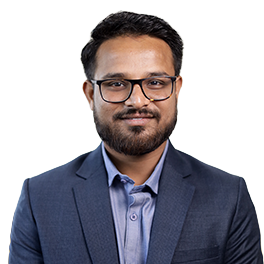
Mohammed Danish
Assistant Professor Trainee
BCA, MCA.School of Computer Science and Engineering
 Academics
 Admissions
 Faculty
 Enquire