
Saba Siddiqi
Assistant Professor
About
Saba Siddiqi is an Assistant Professor with research interests at the intersection of cognitive psychology, decision-making, and attention. She earned her PhD from the Indian Institute of Technology Dhanbad, where her research focused on understanding how mind-wandering influences human decision-making. Her work integrates experimental psychology, behavioural science, and cognitive processes to examine how internal mental states shape learning, risk-taking, and judgment.
Her research employs laboratory-based experiments, surveys, and eye-tracking methodologies to investigate the cognitive mechanisms underlying attention and decision-making. She has explored topics such as risky choice behaviour, framing effects, learning in uncertain environments, and the interaction between trait and state mind-wandering. Her work contributes to a deeper understanding of how fluctuations in attention affect real-world decisions across diverse contexts.
She has presented her research at national and international conferences and has been recognized for her scholarly contributions through competitive research funding, including the Anusandhan National Research Foundation (ANRF) International Travel Support Grant.
As an educator, she is passionate about creating an engaging and intellectually stimulating learning environment. She believes that psychology is best understood through the integration of theory, empirical research, and practical application. Her teaching emphasizes critical thinking, scientific inquiry, and ethical research practices, encouraging students to develop both conceptual understanding and research competence.
Beyond teaching and research, she is committed to mentoring students and fostering curiosity about human cognition and behaviour. She aspires to inspire the next generation of psychologists by promoting rigorous scientific thinking and a research-oriented mindset. Through her academic endeavours, she continues to contribute to the growing body of knowledge in cognitive psychology while preparing students to address contemporary challenges in psychological science.
This study examines how state and trait mind-wandering interact to shape learning under conditions of uncertainty. The findings highlight that spontaneous mind-wandering can facilitate adaptive learning, challenging the conventional view that it is purely detrimental to performance.
This study explores how mind-wandering tendencies and personality traits jointly shape decision-making styles. Our findings show that spontaneous and deliberate mind-wandering are meaningfully linked to patterns of adaptive and maladaptive decision-making, even beyond the influence of the Big Five personality traits.
The results highlight how everyday attentional tendencies shape confidence, vigilance, and broader decision-making patterns.
This study examined how individual temperaments, impulsivity, the behavioural approach system (BAS), and the behavioural inhibition system (BIS) relate to procrastination, with a particular focus on the mediating role of mind-wandering. We found that impulsivity and BIS predicted greater passive procrastination but lower active procrastination, while spontaneous mind-wandering emerged as a key mechanism, being positively associated with passive procrastination and negatively associated with active procrastination. Moreover, spontaneous mind-wandering mediated the effects of impulsivity and BIS on both forms of procrastination. These findings underscore the central role of trait mind-wandering in shaping procrastination behaviours and provide new insights into the cognitive and motivational mechanisms that influence how people delay tasks.
Research Area: Cognitive Psychology, with a focus on attention, mind-wandering, and decision-making.
Investigates how trait and state mind-wandering influence risky decision-making, learning under uncertainty, and cognitive performance.
Examines the interaction between attention, impulsivity, temperament, and procrastination to understand individual differences in behaviour.
Uses experimental paradigms, surveys, and eye-tracking techniques to study cognitive processes.
Interested in risk-taking behaviour, framing effects, and learning mechanisms.
Recipient of the ANRF International Travel Support (ITS) Grant.
Committed to advancing evidence-based psychological science through research, teaching, and student mentorship.
ANRF International Travel Support (ITS) Grant.
Awarded by the Anusandhan National Research Foundation (ANRF) to present research at the International Congress of Applied Psychology 2026 in Florence.
Academic Excellence Award in Psychology Honours
Awarded First Prize for outstanding academic performance in Psychology Honours during undergraduate studies, recognizing academic excellence and consistent achievement in the discipline.
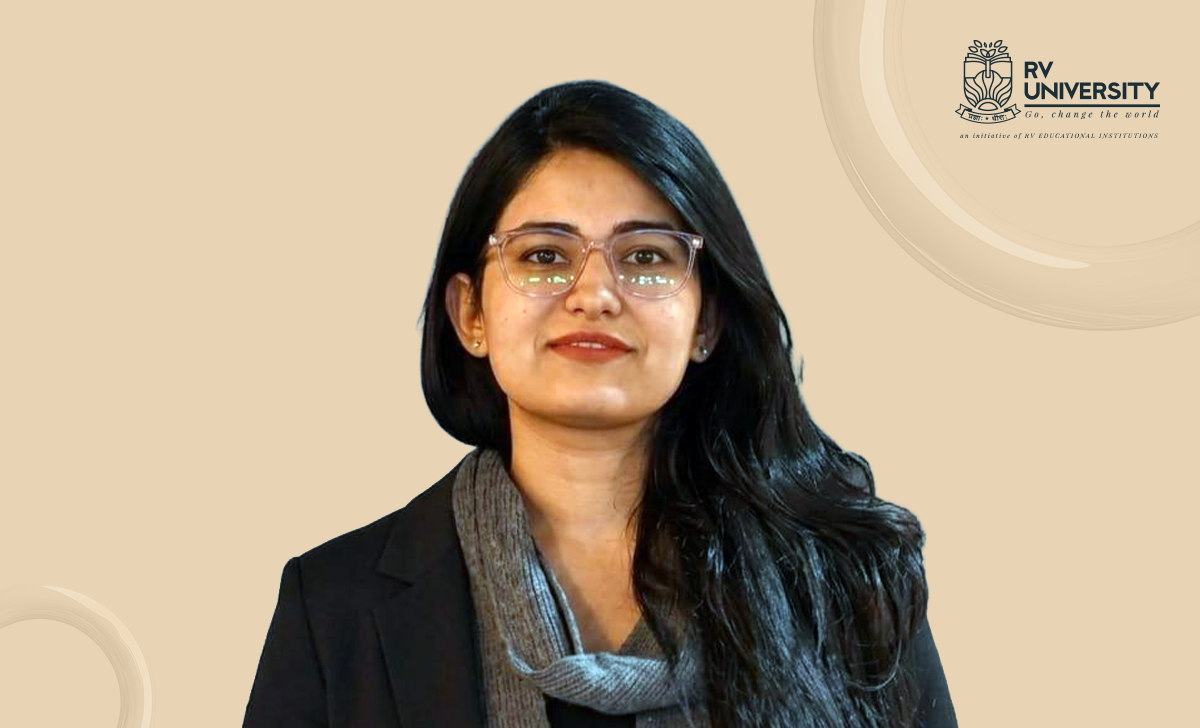
Saba Siddiqi
Assistant Professor
School of Liberal Arts and Sciences
-
 sabasiddiqi@rvu.edu.in
 -
 Bengaluru
 Academics
 Admissions
 Faculty
 Enquire