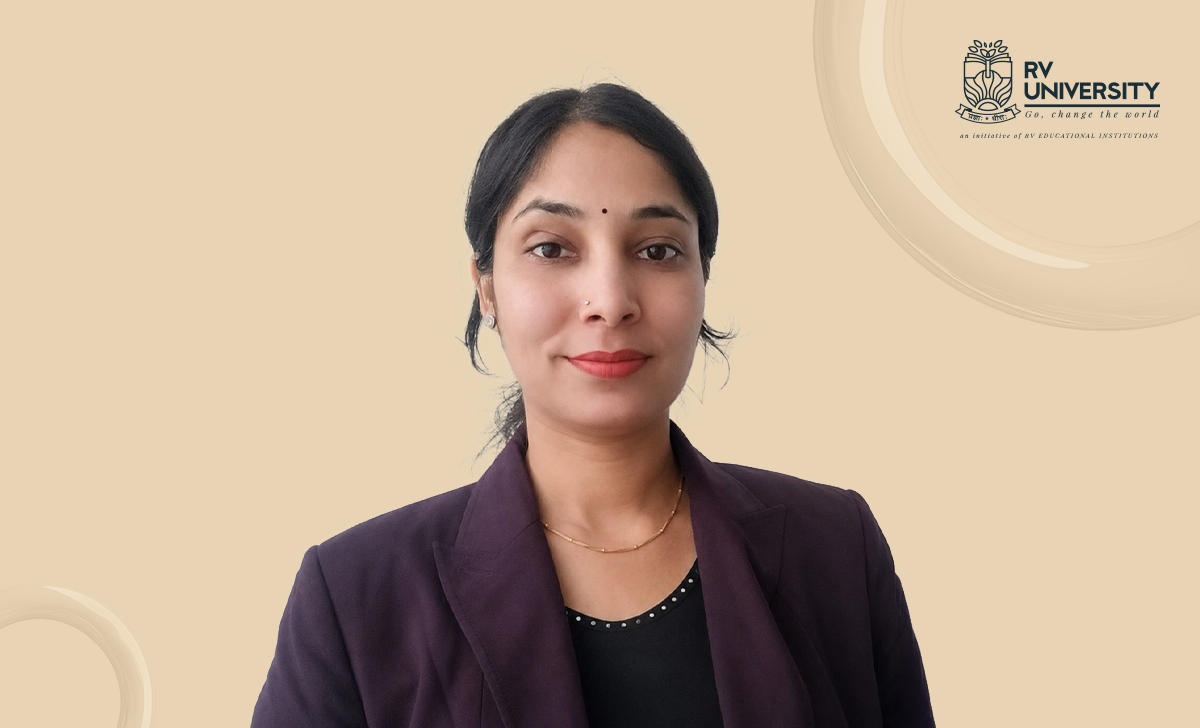
Dr. Shalu Atri
Assistant Professor

About
Hi, I am Dr. Shalu Atri, an Assistant Professor passionate about developing advanced functional materials for sustainable environmental remediation and water treatment. My current research focuses on constructing MXene–MOF hybrid systems for adsorption-coupled hydrated electron generation and reductive defluorination of legacy and emerging per- and polyfluoroalkyl substances (PFAS), addressing one of today’s most pressing environmental challenges.
I earned my Ph.D. from the University of Delhi in 2021, where I developed novel oxide- and sulfide-based materials and investigated their structure–property relationships. This work provided me with a strong foundation in semiconductor material synthesis, advanced characterization techniques, and the development of functional materials for real-world environmental applications.
From December 2020 to August 2022, I served as an Assistant Professor at Shree Guru Gobind Singh Tricentenary University, Gurugram. In 2022, I was awarded the prestigious Marie Skłodowska-Curie Actions (MSCA) Postdoctoral Fellowship at Comenius University Bratislava, Slovakia. My research there focused on MXene-based hybrid materials for removing pharmaceutical residues and other emerging contaminants from water. I subsequently continued as an Assistant Professor at Comenius University, expanding my expertise in catalyst engineering, adsorption-photocatalysis coupling, and advanced oxidation processes.
I have also had the opportunity to work as a Visiting Researcher at Tulane University, USA, and Uppsala University, Sweden, fostering international collaborations in advanced materials and sustainable water treatment technologies.
Currently, at RV University, my research integrates advanced material synthesis, catalyst characterization, mechanistic investigations, and environmental applications to develop next-generation technologies for PFAS and pharmaceutical pollutant remediation. I have published over 30 research articles in reputed Q1 and Q2 peer-reviewed international journals, authored several book chapters, and reviewed more than 70 manuscripts for leading scientific journals.
Shalu Atri,* Hamidreza Behtooei, Frantisek Zazimal, Arshitha Madhusudhan, Mario Kotlar, Jana Makukova, Andrea Sevcovicova, Tomas Roch, Marcello Brigante, Michael Naguib, Olivier Monfort*, Novel Nb4C3Tx-Co3O4 nanohybrid as AOP catalyst for potential quaternary treatment of wastewaters containing pharmaceuticals, Chem. Eng. J. 534 (2026) 174993. (I.F. 13.85).
Shalu Atri, Vinod Bala Taxak, Sachin Pal, “Introduction to up Conversion Phosphor” chapter 1 in book, Upconversion Luminescence of Phosphors, Springer, Progress in Optical Science and Photonics, 2026, 39, 1-19.
Oral presentation
Versatility of MXenes in Efficient Aops: Nanomaterials’ Precursors And Cocatalysts, 7th International Conference on Environmental Applications of Advanced Oxidation Processes (EAAOP-7), June 10th – 13th 2025, Ariston Hotel, Paestum (Salerno), Italy
Catalytic applications of mesoporous CaBi2O4 obtained as single source precursor, ISMC-2018, BARC, 4-8 December 2018, Mumbai, India
Three invited talks highlight my expertise in using MXenes, particularly functionalized with ferrites or CoFe2O4, for advanced environmental remediation and hydrogen production.
Université Clermont Auvergne (Clermont-Ferrand, France): Collaboration with Marcello Brigante, focusing on advanced oxidation processes (AOPs), catalysis, and environmental remediation.
Supervising and mentoring activities: Four M.Sc students supervised for master’s thesis dissertation
Research Gate
Link: https://www.researchgate.net/profile/Shalu-Atri/publications
Link: https://scholar.google.com/citations?user=4fapnwgAAAAJ&hl=en
Advanced Functional Materials: Design and synthesis of novel nanostructured materials for environmental remediation.
MXene-Based Nanomaterials: Engineering MXene and MXene-based hybrid materials for water purification and environmental applications.
Advanced Oxidation and Reduction Processes: Design of sustainable catalytic systems for efficient contaminant degradation.
PFAS Remediation: Innovative catalytic approaches for the degradation and defluorination of legacy and emerging per- and polyfluoroalkyl substances (PFAS).
Emerging Contaminants: Removal of pharmaceutical residues, dyes, and other persistent organic pollutants from water.
Catalyst Characterization: Structure–property relationship studies using advanced material characterization techniques.
Mechanistic Investigations: Understanding reaction pathways and catalytic mechanisms for environmental applications.
Sustainable Water Treatment: Development of next-generation technologies for safe, energy-efficient, and environmentally sustainable water purification.
Research Interests
Advanced Functional Materials for Environmental Remediation
Photocatalysis and Photocatalytic Materials
MXene-Based Nanomaterials and Hybrid Composites
Metal–Organic Frameworks (MOFs) and MXene–MOF Hybrids
Per- and Polyfluoroalkyl Substances (PFAS) Remediation
Advanced Oxidation and Reduction Processes (AOPs/ARPs)
Water and Wastewater Treatment Technologies
Emerging Contaminants and Pharmaceutical Pollutant Removal
Semiconductor Materials and Catalyst Engineering
Adsorption–Catalysis Coupled Systems
Hydrated Electron Chemistry for Environmental Applications
Nanostructured Catalysts for Sustainable Water Purification
Structure–Property Relationships of Functional Materials
Environmental Nanotechnology
Sustainable Materials for Clean Water Technologies
Honours and Awards
Young Scientist Award, International Conference on Viksit Bharat 2047: Reaching the Unreached through Chemical & Biological Sciences (VBCB-2025), February 18-20, 2025, Department of Chemistry, SRM IST Delhi- NCR Campus, Ghaziabad, U.P., India
Marie-Sklodowska-Curie Fellow award (09/09/2022-2025)
Featured in Comenius University Magazine for winter session 2024-2025, https://uniba.sk/nu/
UGC-Junior Research Fellowship, UGC-CSIR Joint Branch, Delhi, India (13/12/2016-30/12/2020)
NCC ‘B’ & 'C' Certificates
Outstanding performance in XRD Quiz sponsored Malvern Panalytical, India and conducted as part of the TEQIP III Sponsored Online Workshop on “Advanced Techniques for Materials Characterization” 6-10th July, 2020.

 Academics
 Admissions
 Faculty
 Enquire