
Dr. Tuhin Kumar Maji
Assistant ProfessorAbout
Dr. Tuhin Kumar Maji is an Assistant Professor in the School of Computer Science and Engineering at RV University, Bengaluru, where he teaches Semiconductor Devices and Exploring Sciences. He is interested in developing research-informed approaches to science and engineering education. His academic and research experience spans computational materials science, semiconductor physics, nanotechnology, and interface-engineered functional materials.
Dr. Maji has an active and diverse research profile encompassing computational modelling, materials synthesis, advanced characterization, and device-oriented studies. His research focuses on understanding how atomic-scale structure, chemical composition, and nanoscale interfaces influence the electronic, optical, magnetic, and transport properties of advanced materials. His work integrates first-principles calculations, density functional theory, time-dependent DFT, quantum transport modelling, spectroscopy, microscopy, and targeted experimental validation. His current research interests include metallic nanohybrids, two-dimensional heterostructures, oxide-based photocatalysts, quantum transport, electron–phonon interactions, and materials for optoelectronic and energy-related applications.
Dr. Maji has authored or co-authored more than 35 peer-reviewed publications, with over 800 citations, in journals including Nature Communications, Science Advances, ACS Applied Materials & Interfaces, and Physical Review B. His academic achievements include SERB and DST-INSPIRE fellowships, competitive research funding, presentation awards, and collaborations with leading research institutions in India and abroad.
He completed his PhD at the S.N. Bose National Centre for Basic Sciences, Kolkata, and was subsequently awarded a SERB National Postdoctoral Fellowship at the Indian Institute of Science, Bengaluru. His postdoctoral research focused on Ag@Au nanohybrids, strong electron–phonon coupling, and nonclassical transport phenomena. He holds an M.Sc. in Physics from the Indian Institute of Technology Madras and a bachelor’s degree in Physics from Ramakrishna Mission Vidyamandira, Belur Math. Before joining RV University, he served at Ramaiah University of Applied Sciences, where he taught and developed courses in computational physics, semiconductor physics, solid-state physics, and nanomaterials science.
Maji, T. K., and Karmakar, D. (2026). Nanostructured Semiconductors for Broadband Photocatalysis. In Ningthoujam, R. S., and Tyagi, A. K. (Eds.), Handbook of Materials Science, Volume 4. Indian Institute of Metals Series. Springer, Singapore.
Kumbhakar, S., Maji, T. K., Tongbram, B., et al. (2025). Engineering ultra-strong electron–phonon coupling and nonclassical electron transport in crystalline gold with nanoscale interfaces. Nature Communications, 16, 6.
Maji, T. K., Pal, S. K., and Karmakar, D. (2018). Hole-doping and contact-induced spin polarization in Weyl semimetal TaAs. AIP Conference Proceedings, 1942, 130053.
Research focuses on the design and understanding of interface-engineered functional materials for quantum transport, photocatalysis, optoelectronics, and energy-related applications.
Investigates how atomic-scale structure, chemical composition, defects, and nanoscale interfaces govern the electronic, optical, magnetic, catalytic, and transport properties of advanced materials.
Employs an integrated theory–experiment approach combining density functional theory (DFT), time-dependent DFT (TDDFT), atomistic simulations, quantum transport modelling, spectroscopy, microscopy, and targeted experimental validation.
Develops and studies metallic nanohybrids, particularly Ag@Au systems, to understand interface-driven electron–phonon interactions, charge redistribution, nonclassical transport, and emergent quantum phenomena.
Designs oxide-based hybrid photocatalysts and heterostructures for broadband solar-energy harvesting, photocatalytic water remediation, photoelectrochemical processes, and energy conversion.
Explores two-dimensional transition-metal dichalcogenide (TMDC) heterostructures, including MoS₂-, MoSe₂-, TiO₂-, graphene-, and graphene-oxide-based systems, with emphasis on band alignment, doping, interfacial charge transfer, exciton dynamics, and device transport.
Studies bimetallic, metal–semiconductor, and metal–Weyl-semimetal interfaces to investigate symmetry breaking, spin polarization, unusual band structures, epsilon-near-zero optical response, and topological phenomena.
Uses first-principles and transport calculations to establish structure–property relationships and guide the rational design of materials with targeted electronic, optical, and catalytic functionality.
Integrates computational predictions with advanced characterization techniques, including XRD, XPS, Raman spectroscopy, UV–Vis spectroscopy, photoluminescence, FTIR, SEM, TEM, HRTEM, HAADF-STEM, AFM, and cryogenic transport measurements.
Current research direction emphasizes data-enabled materials discovery, reproducible materials design, and the development of predictive frameworks for next-generation semiconductor, quantum, photonic, and energy materials.
Research Interests
Dr. Tuhin Kumar Maji’s research focuses primarily on the first-principles design and computational investigation of functional materials and nanoscale interfaces. His work employs DFT, TDDFT, phonon calculations, electronic-structure analysis, and quantum-transport modelling to understand band alignment, charge transfer, defect states, electron–phonon interactions, optical response, and transport phenomena in metallic, oxide, two-dimensional, and topological systems. These computational studies are closely integrated with experimental research involving the synthesis and characterization of nanohybrids, heterostructures, and photocatalytic materials. Techniques including spectroscopy, electron microscopy, XPS, XRD, and cryogenic transport measurements are used to validate computational predictions, establish reliable structure–property relationships, and translate theoretical insights into experimentally testable materials and device concepts. His broader research interests include quantum materials, semiconductor interfaces, electron–phonon coupling, quantum transport, photocatalysis, solar-energy harvesting, two-dimensional heterostructures, optoelectronic materials, and data-enabled materials discovery.
SERB National Postdoctoral Fellowship
Awarded by the Science and Engineering Research Board, Government of India, in recognition of research excellence in Ag/Au nanohybrids and interface-driven transport phenomena.
Institution of Eminence Postdoctoral Fellowship
Received the Institution of Eminence Postdoctoral Fellowship in 2022 to pursue advanced research in computational materials science and quantum nanohybrids.
DST-INSPIRE Fellowship for Doctoral Research
Awarded the DST-INSPIRE Fellowship for doctoral research on functionalized nanohybrids, interfacial charge dynamics, photocatalysis, and computational materials modelling.
DST-INSPIRE Scholarship for Undergraduate Studies
Received the DST-INSPIRE Scholarship for academic excellence and continued development in physics and scientific research during undergraduate studies.
ACS Best Poster Award
Received the ACS Best Poster Award at SMST 2020 for research contributions in spectroscopy, nanomaterials, and computationally guided materials design.
Hot Topic Presentation Shortlist
Shortlisted for a Hot Topic Presentation at ISCAN 2019, Virginia, USA, recognizing the scientific significance and originality of his research.
SERB International Travel Grant (Twice)
Awarded SERB International Travel Grants to present research at the APS March Meeting 2023 and AIChE Conference in 2019.
CSIR International Travel Grant
Received a CSIR International Travel Grant to participate in the 2D Materials Congress 2019 in Sochi, Russia.
IIT-JAM All India Rank
Secured All India Rank 135 in Physics in the Indian Institute of Technology Joint Admission Test for M.Sc. programmes.
JEST Qualification
Qualified the Joint Entrance Screening Test in Physics for admission to doctoral research programmes in India.
GATE Qualification
Qualified the Graduate Aptitude Test in Engineering in Physics, demonstrating proficiency in advanced physics and quantitative problem-solving.
Faculty Development Workshop
Conducted a faculty development workshop on DFT-guided pedagogy in materials science, promoting computational and open-source tools in contemporary science education.
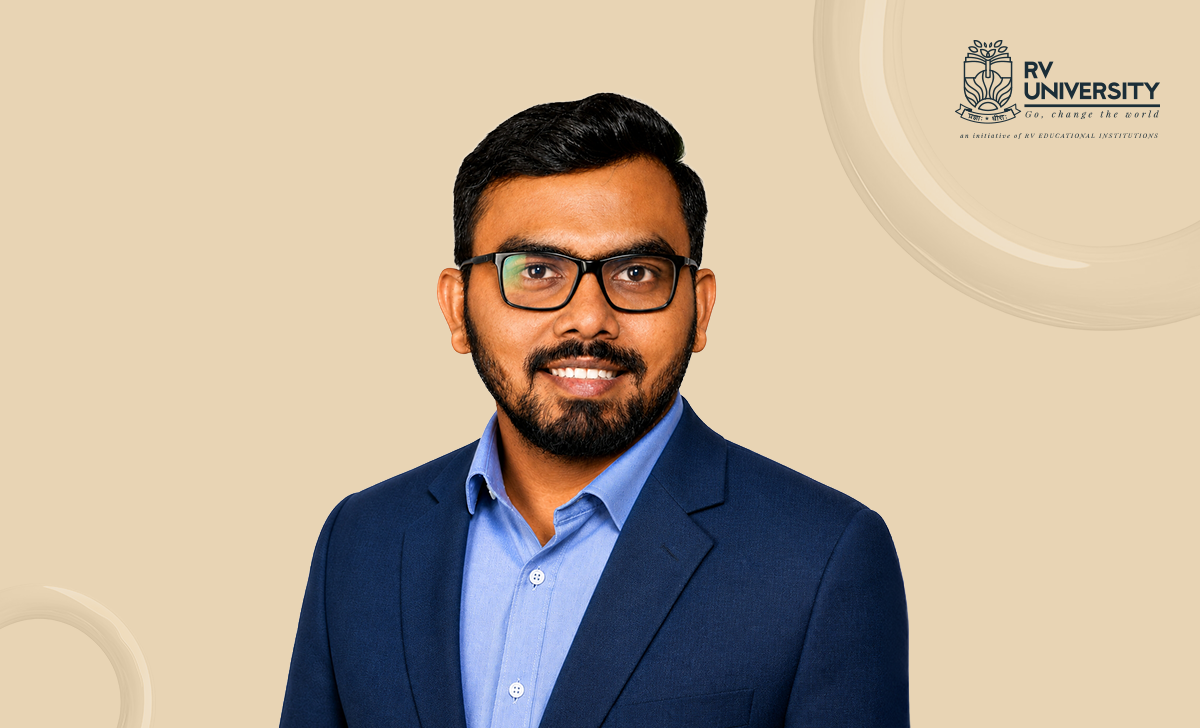
Dr. Tuhin Kumar Maji
Assistant Professor
Ph.D. | 4 Years of Postdoctoral Research ExperienceSchool of Computer Science and Engineering
-
 tuhinkumarmaji@rvu.edu.in
 -
 Bengaluru
 Academics
 Admissions
 Faculty
 Enquire