Artificial intelligence assisted photonic bio sensing for rapid bacterial diseases
View Source
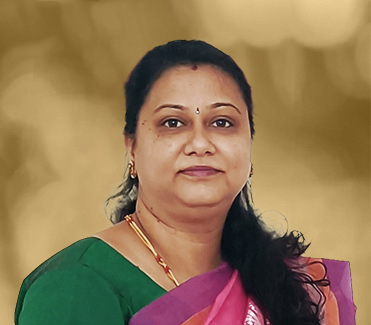
Dr. Rashmi S
Professor, School of Computer Science and Engineering
RV University, Bengaluru
Dr. Rashmi S is an academician and researcher with over two decades of experience in teaching, research, and academic leadership. She holds a Ph.D. in Computer Science and Engineering with a specialization in Cloud Computing and has contributed significantly to higher education through her commitment to research, innovation, and academic excellence.
Before joining RV University, she served as the Head of the Department of Computer Science and Engineering (Data Science), where she led several academic initiatives aimed at enhancing research culture, fostering interdisciplinary collaboration, and strengthening industry engagement. In her leadership capacity, she has also served as Chairperson of the Board of Studies (BOS) and Board of Examiners (BOE), actively contributing to curriculum design, academic governance, and examination reforms. She has also served as a research coordinator and member of academic committees, contributing to the overall academic governance and research initiatives of the department.
Dr. Rashmi is a recognized Ph.D. research supervisor and currently guides multiple doctoral scholars in emerging domains of computing. Her research interests include Cloud Computing, Artificial Intelligence, Data Science, Internet of Things, Blockchain, and Cybersecurity. She has authored and co-authored many papers in reputed national and international journals indexed in Scopus and SCI, and has contributed several book chapters published by leading academic publishers.
Her research contributions also extend to innovation and applied technologies, with patents filed in the fields of artificial intelligence, healthcare, and assistive technology. She has presented papers at various national and international conferences and has received accolades, including a Best Paper Award for her research on advanced image analysis techniques.
In addition to her academic and research achievements, Dr. Rashmi has been actively involved in industry–academia collaborations, establishing Centres of Excellence and promoting experiential learning through partnerships with technology organizations. She has also coordinated faculty development programs, symposia, and workshops focusing on emerging trends in computing and data-driven technologies.
An IEEE Senior Member, Dr. Rashmi continues to contribute as a reviewer, session chair, and member of organizing committees for national and international conferences. Through her dedication to academic leadership, research, and innovation, she remains deeply committed to empowering students and fostering excellence in the field of Computer Science and Engineering.

Do your karma; success will follow. Seek purpose, not rewards--Lord Krishna
Abstract: Combining artificial intelligence (AI) and photonic biosensors is a new method of high-accuracy bacterial detection. In the present work, a decision tree classifier is used, aimed at the classification of bacterial species by taking readings from the wavelength measurements extracted from photonic sensor simulations performed using Rsoft. The data set is processed through univariate analysis, Kernel density estimation (KDE) and box plot evaluation, and optimized feature selection as well as outlier removal. The classifier is trained with a 70.27 % classification accuracy. Performance evaluation using a confusion matrix highlighted the classification efficiency. The obtained findings show the promise of AI based photonic bio sensing for the bacterial infectious diseases.
Photography is the most important, powerful, and reliable means of expression. Today, digital images not only provide disinformation but also act as agents for secret communication. Users and editing professionals work with digital images for a variety of purposes. Images are often regarded as facts or proof of reality, so they are misleading and fake news or publications of any form that use images manipulated in a highly misleading way. To recognize image tampering needs multiple image data and a model that can handle all the pixels in the image. Furthermore, training the data more efficiently and needed flexibility support everyday use. Models based on Deep learning such as Convolutional Neural Networks with error level analysis (ELA) are the perfect solution.
The availability of high-resolution satellite images increases with advancements in remote sensing technology. These satellite images are used in various earth observation applications such as disaster management, military applications, weather forecasting, land use and cover, and many more. Satellite images have large volumes stored in memory devices. These satellite images are transmitted to the ground station for processing and analysis. In these cases, images are vulnerable to privacy issues. As technology advances, onboard processing of satellite images using intelligent systems processes the images faster. A model such as field programmable gate arrays (FPGA) is used in onboard processing to process satellite images. However, images are susceptible to faults induced by harsh radiation environments in space. Encryption is one of the most assured methods to provide privacy to satellite images. Hence, encryption of satellite images during processing, storage, and transmission is the present rising demand. There are various encryption methods implemented using algorithms such as advanced encryption standard (AES), homomorphic, advanced encryption standard-counter (AES-CTR), and chaotic maps. Concurrent processing and encryption of images using MapReduce with Hadoop Framework perform the task faster. The focus of this paper is a comparative study of the various encryption methods used in recent years.
Hadoop on datacentre is a popular analytical platform for enterprises. Cloud vendors host Hadoop clusters on the datacentre to provide high performance analytical computing facilities to its customers, who demand a parallel programming model to deal with huge data. Effective cost/time management and ingenious resource consumption among the concurrent users, must be the primary concern without which the key aspiration behind high performance cloud computing would suffer. Workflows portray such high performance applications in terms of individual jobs and dependencies between them. Workflows can be scheduled on virtual machines (VMs) in datacentre to make best possible use of resources. In the authors’ earlier work, a mechanism to pack and execute the customer jobs as workflows on Hadoop platform was proposed which minimises the VM cost and also executes the workflow jobs within deadline. In this work, the authors try to optimise certain other parameters such as load on cloud, response time for workflows, resource usage effectiveness by applying soft computing methods. Stochastic hill climbing (SCH) is a soft computing approach used to solve many optimisation problems. In this study, they have employed the SHC approach to schedule workflow jobs to VMs and thereby optimise the above mentioned multiple parameters in cloud datacentre.
Cloud computing and internet of things (IoT) are two disparate technologies that can be united for a common purpose as in an operating profit. The technologies are integral parts of modern sophisticated human life. In the future, it is destined to proliferate boundlessly covering utmost spheres. This chapter describes the challenges faced in adopting the two technologies. Edge computing includes both computing and processing the information are carried at the edge of the IoT devices where vast information gathered instead of relying on the central location. Benefits include avoiding latency issues, improving the performance of the application, and cost effectiveness as it reduces the data volume to be processed in cloud/centralized location. In the advent of IoT devices, edge computing is a vital step in building any of its application which sends and receives enormous information to and from the cloud over the course of operations. Applications such as virtual reality and smart systems are benefited by edge computing as they expect higher rate of response and processing speed. A case study on video surveillance is done in this chapter.
Published 3 patents in assistive technology, secure IoT healthcare, and pandemic solutions
Authored 3 book chapters on cloud, IoT, and blockchain technologies
Published research papers in reputed journals
est Paper Award for the paper “ CNN Based Multi-View Classification and ROI Segmentation: A survey” in the International Conference on Intelligence Engineering Approach (ICIEA-2022) organized in association with Technical Institute for Engineer’s (TIE) , Bengaluru on 12th Feb ,2022
Topper in NPTEL Exam – Python for Data Science March 2025